November 3, 2026Westside Fire
Temporary Levy
Why should you vote IN FAVOR of the Westside Fire Temporary Levy?
Because you can’t risk voting AGAINST.
Right now, a single firefighter is on duty at the Westside Station 2 in Dover.
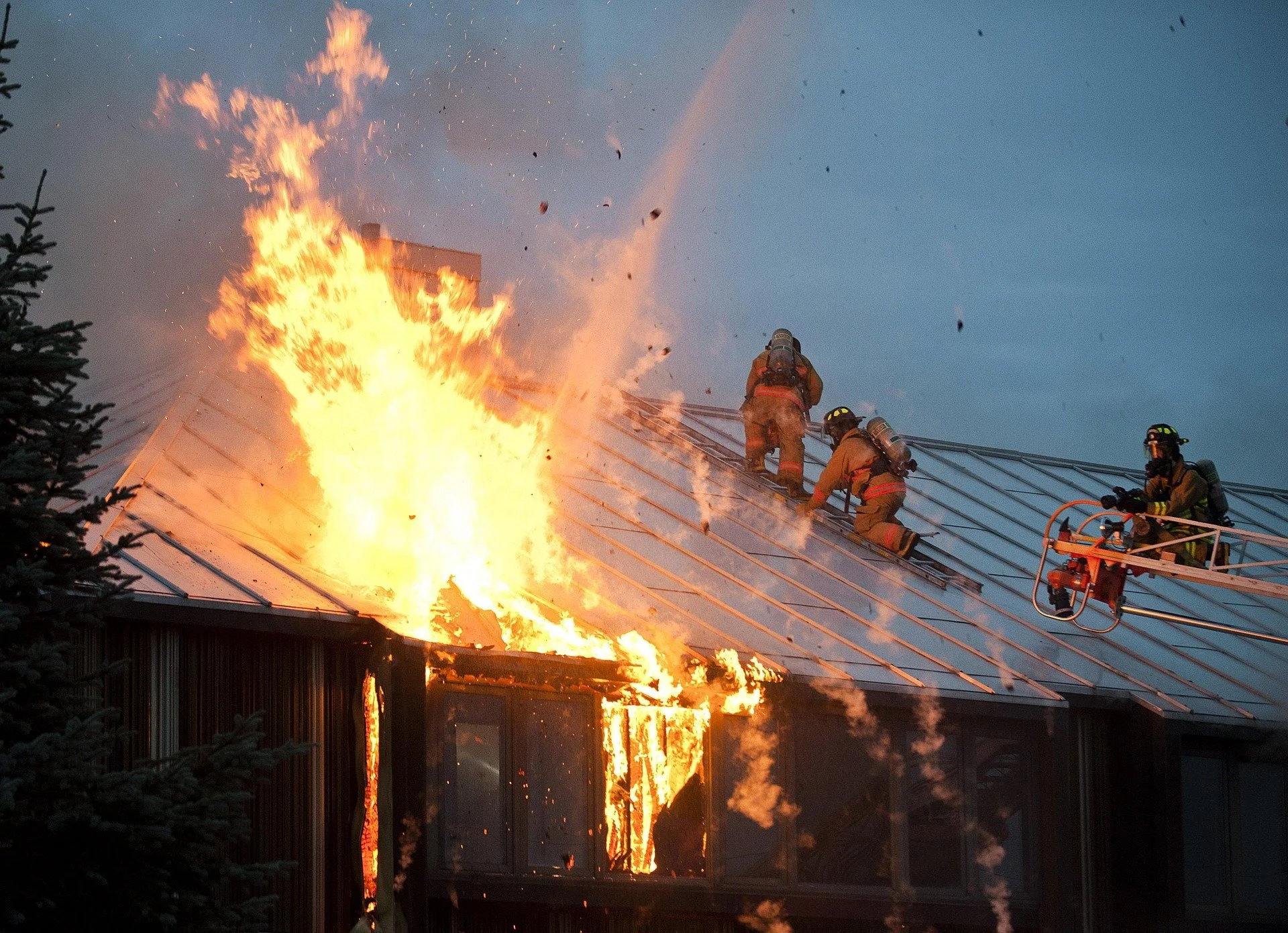
When an incident occurs—heart attack, vehicle collision, brush fire—all on-duty resources are consumed.
Why you should care
YOUR COSTS INCREASE Substandard fire station staffing causes your homeowners insurance to increase—or your home may become uninsurable—due to increased risk of wildfire and Westside’s minimal capacity to respond.
YOUR SAFETY AT RISK When you call 911, you expect them to respond to you. Substandard staffing means when an incident occurs, all on-duty resources are consumed—and may not be available for your emergency.
What you can do
VOTE IN FAVOR of the temporary two-year levy on November 3. Westside Fire District can’t respond adequately to our emergency needs, and the insurance companies know that. The temporary two-year levy would:
Enable Westside to hire three additional firefighters.
Increase daily on-duty staffing to two firefighters at all times.
Save you money—and potentially save your home.
On November 3, vote IN FAVOR of staffing Westside Firehouse—we can’t risk voting against it.
Anything less than this minimum is essentially as functional as zero.
The residents within Westside Fire District… should be prepared to accept outcomes that are congruent with that level.
2026 EMS Needs AssessmentThe cost of voting IN FAVOR
$23 per $100,000 assessed value per year, for two years.
Example: If your home is assessed at $625,000 with a homeowners exemption of $125,000, you would pay an additional $115 per year for two years ($500,000 × $23 = $115/year).
Total cost of a YES vote: $230
The cost of voting AGAINST
$
Example:
Total cost of a NO vote: $
What you’ll see on your ballot
WESTSIDE FIRE PROTECTION DISTRICT
BONNER COUNTY, IDAHO TO LEVY A SPECIAL TEMPORARY TWO-YEAR TAX
November 3, 2026
Shall the Board of Commissioners of the Westside Fire Protection District be authorized and empowered to temporarily increase its budget, pursuant to Idaho Code Section 63-802 (1)(a), to hire three (3) additional firefighter/EMTs, to protect property against fire and to provide life preservation services from the current levied property tax amount of $686,451 to $1,066,451, an increase of three hundred and eighty thousand and no/100 dollars [$380,000.00] commencing with the Fiscal Year 2028 and which shall then be established as the base budget for the purposes of Idaho Code § 63-802, as provided in the resolution of the Board of Commissioners of the Westside Fire Protection District adopted on August 12, 2026.
STATEMENT: The temporary two-year [2] levy will be used to obtain staff, increase the number of daily firefighters from one to two, and will be a temporary tax increase of $23.00 per $100,000 of taxable assessed value, per year, based upon current conditions for a total of $67.00 per $100,000 of taxable assessed value, per year, based upon current conditions.
__ IN FAVOR of authorizing a $380,000 temporary two-year levy override commencing FY 2028.
__ AGAINST authorizing a $380,000 temporary two-year levy override commencing FY 2028.
The Westside Fire Protection District (WFPD) Board has approved a resolution to place a temporary two year budget levy increase on the November 3rd ballot. The budget increase, subject to approval by 50% of voters, would add $380,000 to the District's annual operating budget for two years.
Westside Fire District Current Conditions
The District’s annual operating budget is insufficient to support the operational needs of the District. Recent statutory limitations on annual operating budget increases have reduced allocations for taxes on new construction. Inflationary cost increases, paired with significant population growth and development of previously rural areas has created a budget shortfall. The District’s current annual operating budget cannot sustain the inflated operating costs and staffing needs. Without a long-term solution the District’s ability to provide timely responses for emergency services will continue to diminish.
Despite significant growth within WFPD’s service area, fire protection capacity (staffing and equipment) and facilities have not increased for many years. Response times and immediate on-scene staffing matter. Currently, Westside FPD responds to emergencies with a single firefighter driving the WFPD fire apparatus. Fire fighting operations with a crew, requires waiting for additional firefighters from other fire districts before a significant effort can be applied.
Alternative WFPD revenue efforts are on-going (for example, out of area wildland response) and supplement income for daily WFPD operations.
Levy Override Purposes and Goals
The proposed temporary levy override would provide funds for hiring three firefighters and the necessary protective gear. The additional 24/7 firefighter/EMT coverage will address the immediate need for staffing to meet the needs of our District and improve our ability to respond to emergencies throughout the entire District. Reduced response times save lives and property and contribute to improved Idaho Survey and Rating Bureau (ISRB) ratings, which can result in lower insurance costs for residents.
Collaborating with other Fire Districts
The Westside FPD has developed a working relationship that benefits the community and saves taxpayer dollars.
The District currently shares a Fire Chief and Administrative Assistant with the Sagle FPD. The WFPD also trains and responds with other local fire districts. All of these actions save valuable taxpayer funds and provide improved services for residents of the Westside FPD.
Our Growing District
The District has experienced significant growth since 2018 and now protects over 1600 properties. The number of structures has increased by more than 30% during that time period. Planned subdivisions and recent historical growth patterns suggest continued growth
An increase in fire and medical emergencies, local and commuter traffic, and more structures necessitate the need to staff a crew of firefighter/EMT personnel to achieve optimal response times and maintain public safety standards. Calls for emergency services are increasing.
Evolving Needs Demand Improved Response Times
Westside FPD Firefighter/EMTs protect and respond to emergency calls for service within the entire District and surrounding areas. These emergency responses include medical emergencies, motor vehicle accidents, structure fires, grass fires, water rescues, hazardous materials, public assistance, and more. Overall growth throughout the region has contributed to more traffic on highways that run through the District. Local traffic along with an increasing number of commuters travel through the District daily. This impacts the demand for emergency services. Traffic congestion also affects response times.
In addition to the rapid growth WFPD has experienced, the way the District and departments across the country respond to fires and emergency medical situations has changed.
Residents are most likely to interact with District life-saving personnel during a medical emergency. In fact, 70 to 80% of calls are for emergency medical care. Emergency medical response times to residents due to medical emergencies, structure fires, motor vehicle accidents, and other situations are critical to providing intervention as quickly as possible to save patients and stabilize them for ambulance transport to a nearby hospital.
According to the American Heart Association, after a heart stops beating, brain cells can be severely damaged within four to six minutes. Without intervention, a victim's chances of survival are reduced by 7–10% with every minute that passes. Response time is critical to the public safety of our community.
Today’s house fire burns hotter and quicker due to more synthetic materials used in furniture and other home furnishings which often emit toxic smoke. Also, open floor plans allow fires to spread faster and more freely. Four decades ago, residents had 17 minutes to escape a house fire. Today, it can be as little as 3 to 5 minutes.
These changes necessitate faster response times, strategically located and staffed stations for better access to residential and commercial areas are vital to improving emergency responses.
Fiscal Challenges
While the District’s focus is maintaining emergency service levels and response times throughout its large service area, the collective effect of statutory budget growth limitations implemented in 2021 and increased operating costs have become even more challenging as the District’s limited budget authority is unable to keep up with the demand for emergency services.
Unlike cities and counties, fire districts are not authorized to charge fees for services and therefore are unable to increase fees to help fill the budgetary gap. The majority WFPD’s annual operating income is derived from and relies on property taxes.
We can all appreciate the attempts and desires to decrease property taxes, unfortunately the impact of such legislation has been devastating to fire and EMS agencies across the State.
In addition, inflationary increases in operating costs and equipment purchases have also had a negative impact on our annual budgets. The cost of fire equipment and supplies have increased 20% to as much as 100% over the past three years. The District’s current annual operating budget cannot sustain the inflated operating costs and staffing needs to keep our firefighters safe and provide protection of life and property to our community.
Levy History and Estimated Cost of Proposed Levy Override to Taxpayers
The District’s levy rate has decreased at an unprecedented rate since 2016. If current growth trends continue, it is projected that, even with the proposed levy override which will improve fire protection and emergency medical services, the overall SFPD levy rate will continue to decrease.
Based on current conditions (value of property in the District as of 2025), the estimated annual cost of the increase to homeowners is $23.00 (or $1.92 /month) per $100,000 of taxable assessed value after the homeowner’s exemption (owner-occupied homes are eligible for a homeowner’s exemption of 50% up to a maximum of $125,000).
If the current temporary levy is approved by voters, the new total levy amount is approximately $66 / $100,000 of net property value.